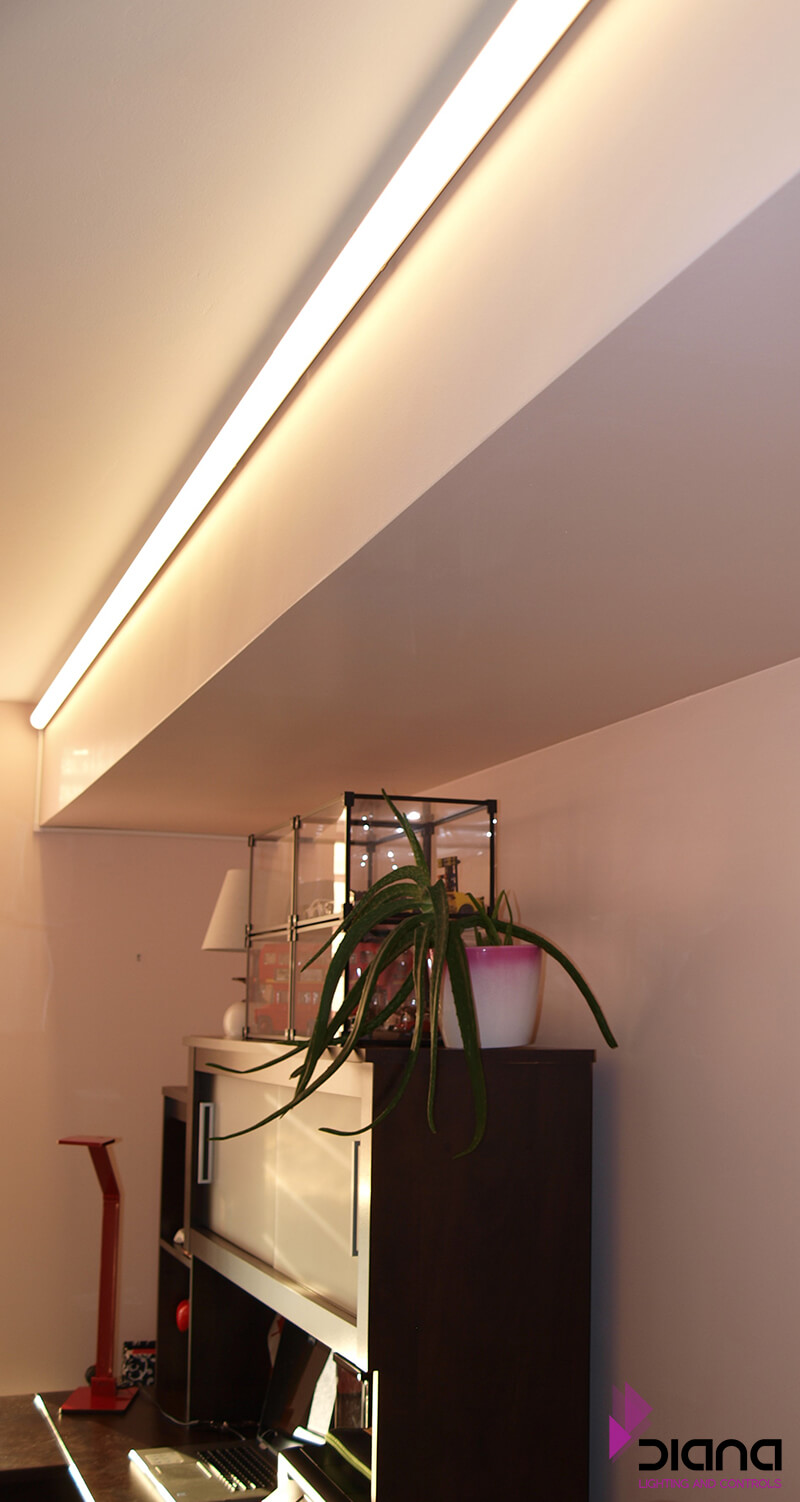
What is linear lighting?
Linear lighting refers to lighting fixtures that are significantly longer than they are wide, typically in the form of continuous strips, bars, or profiles. The term describes both the shape of the fixture and the type of illumination it produces, which is distributed evenly across the length of the fixture rather than concentrated at a single point. Linear LED lighting has become the dominant form of architectural lighting in contemporary residential and commercial interiors because of its clean profile, design flexibility, and compatibility with modern dimming and control systems.
What does a linear light look like?
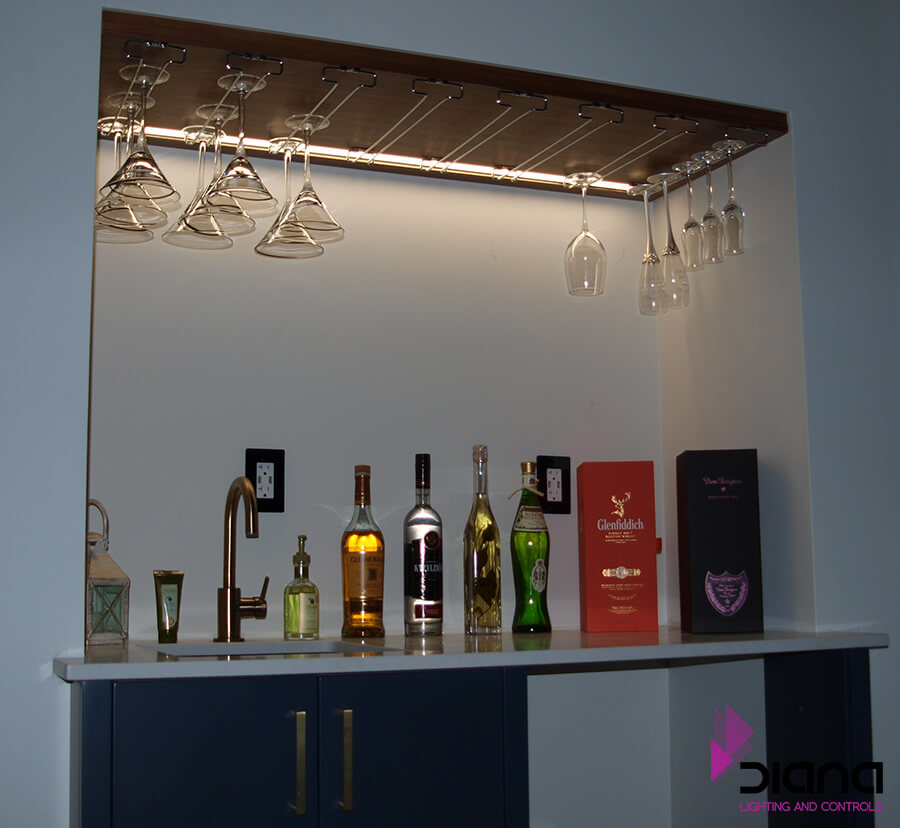
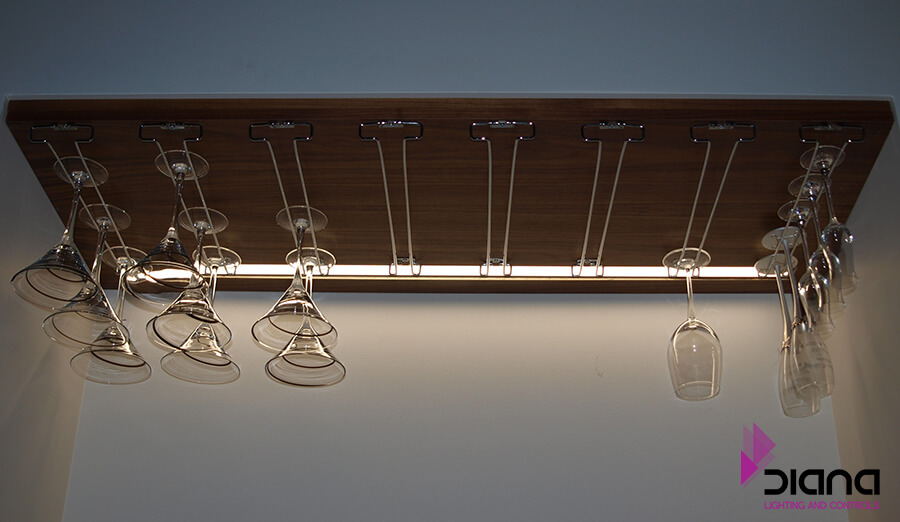
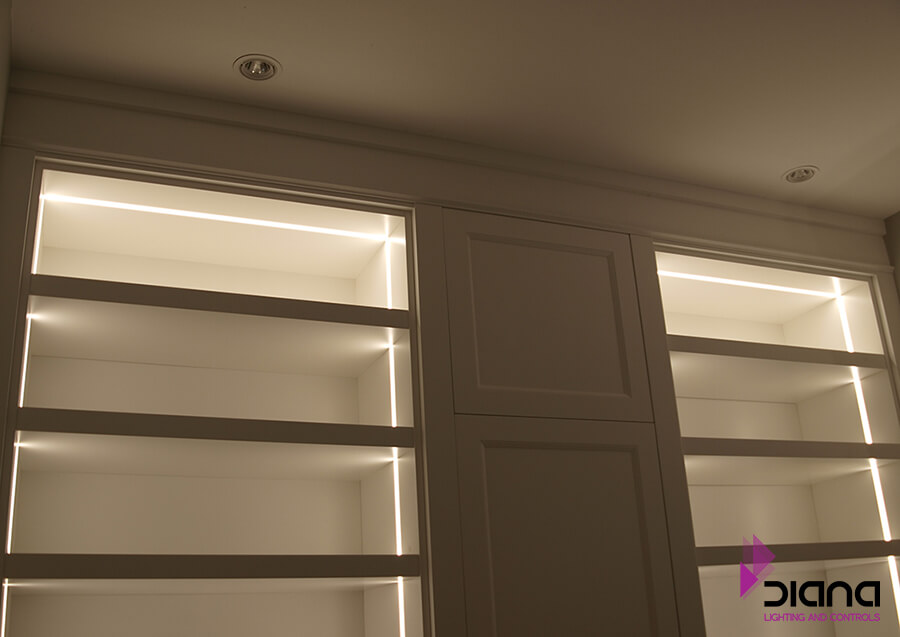
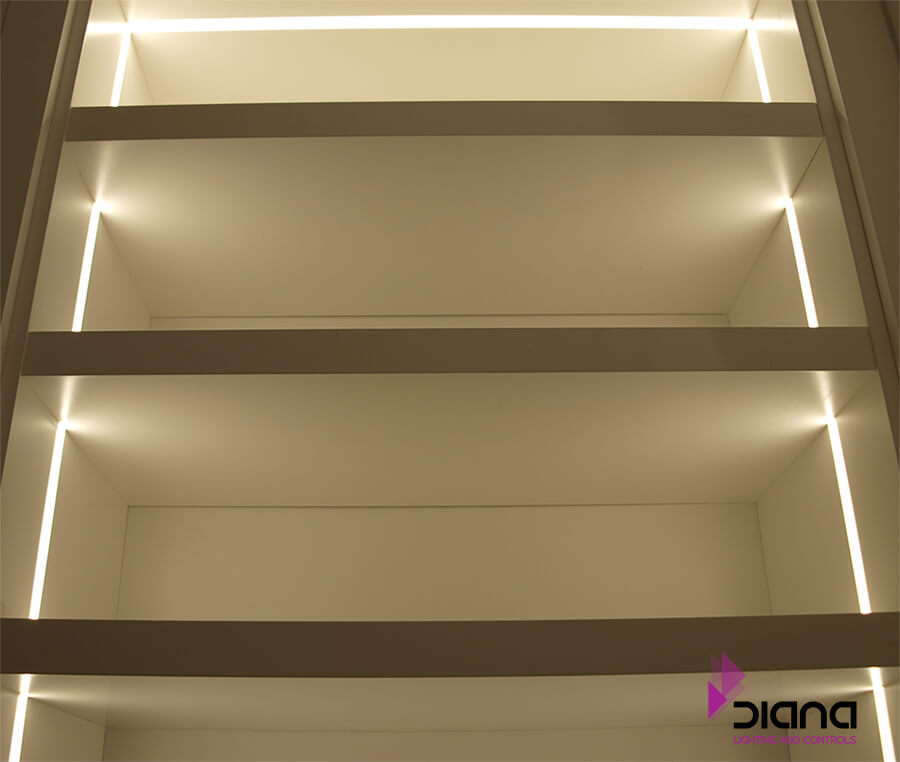
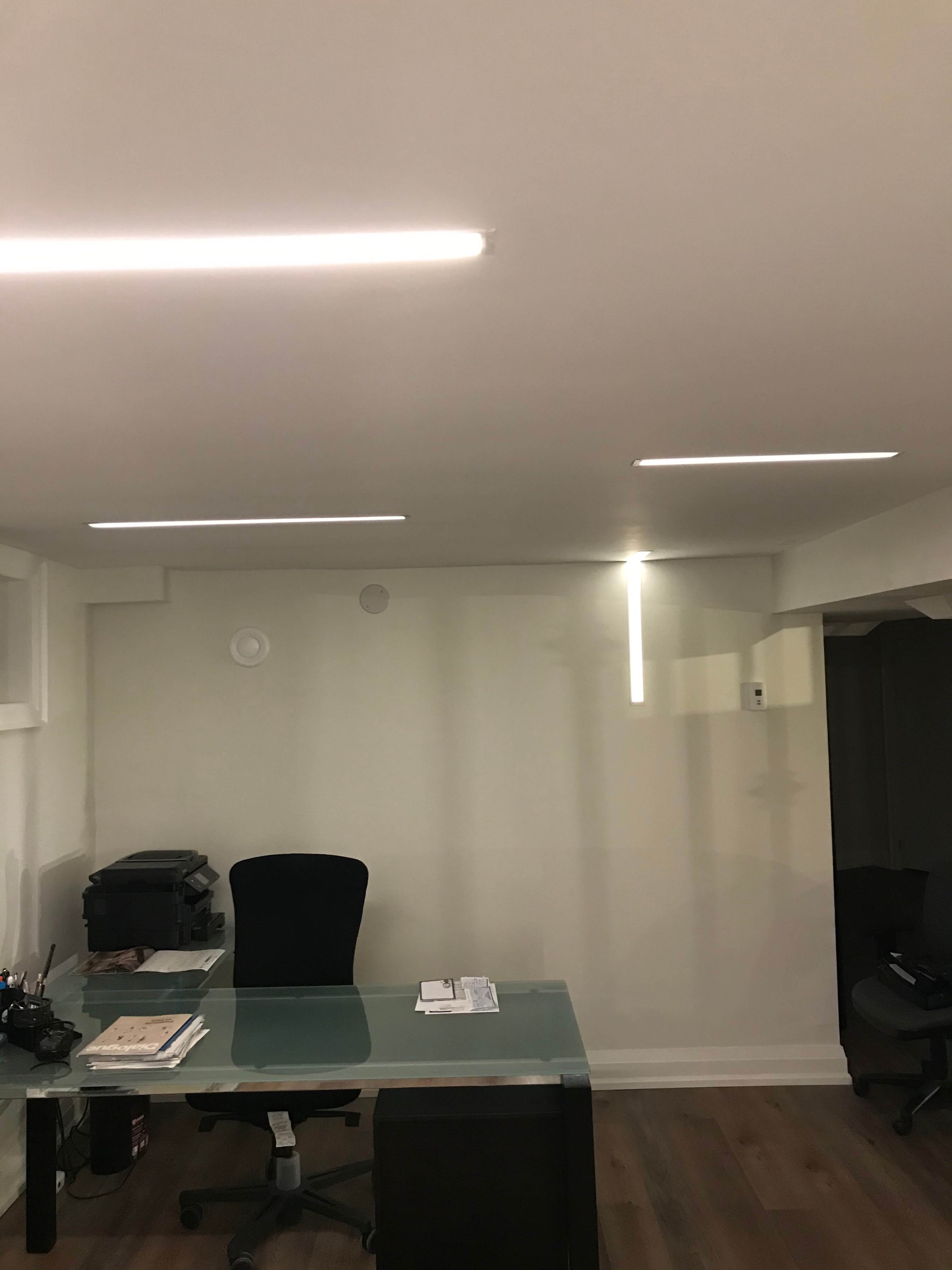
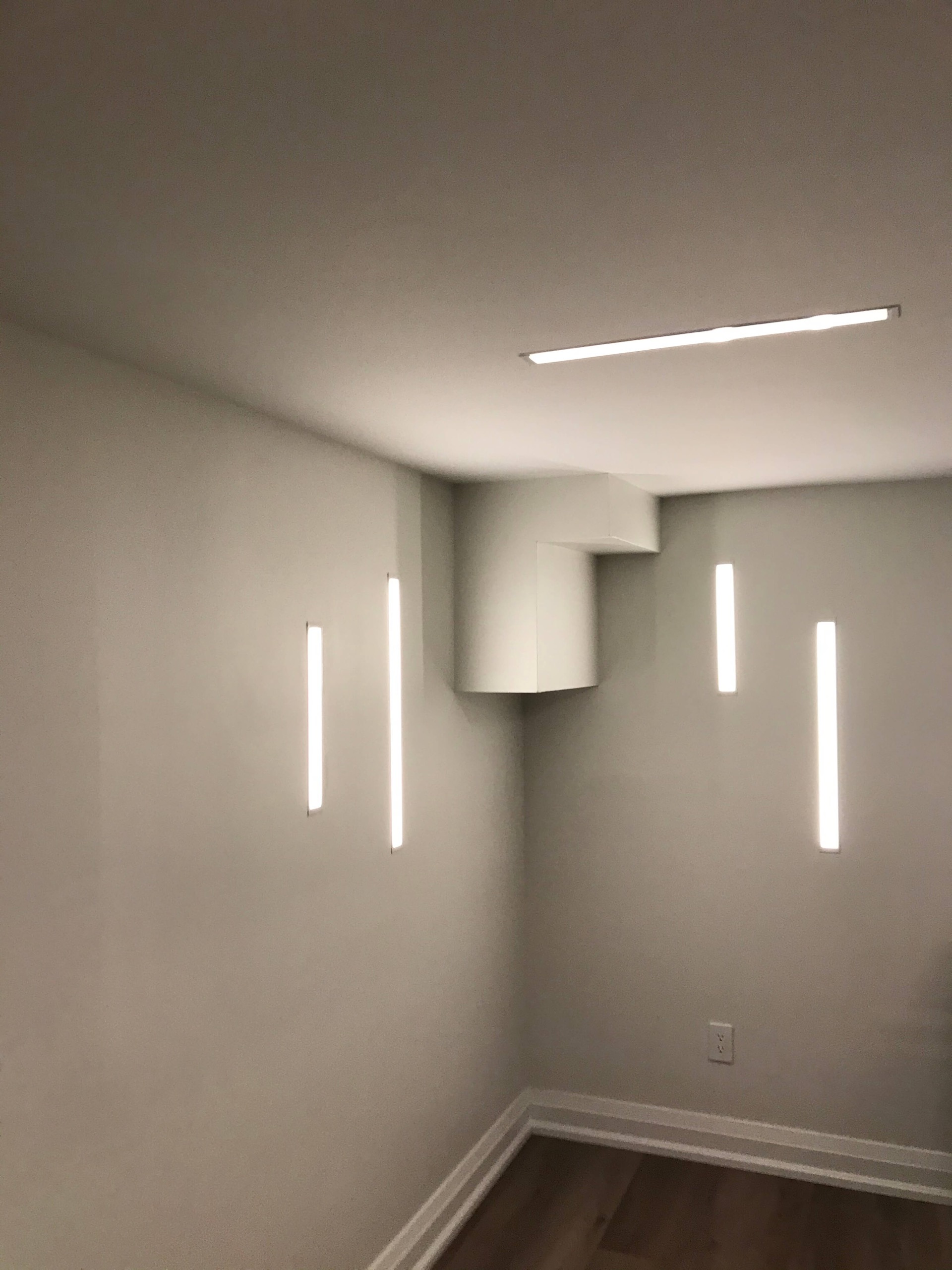
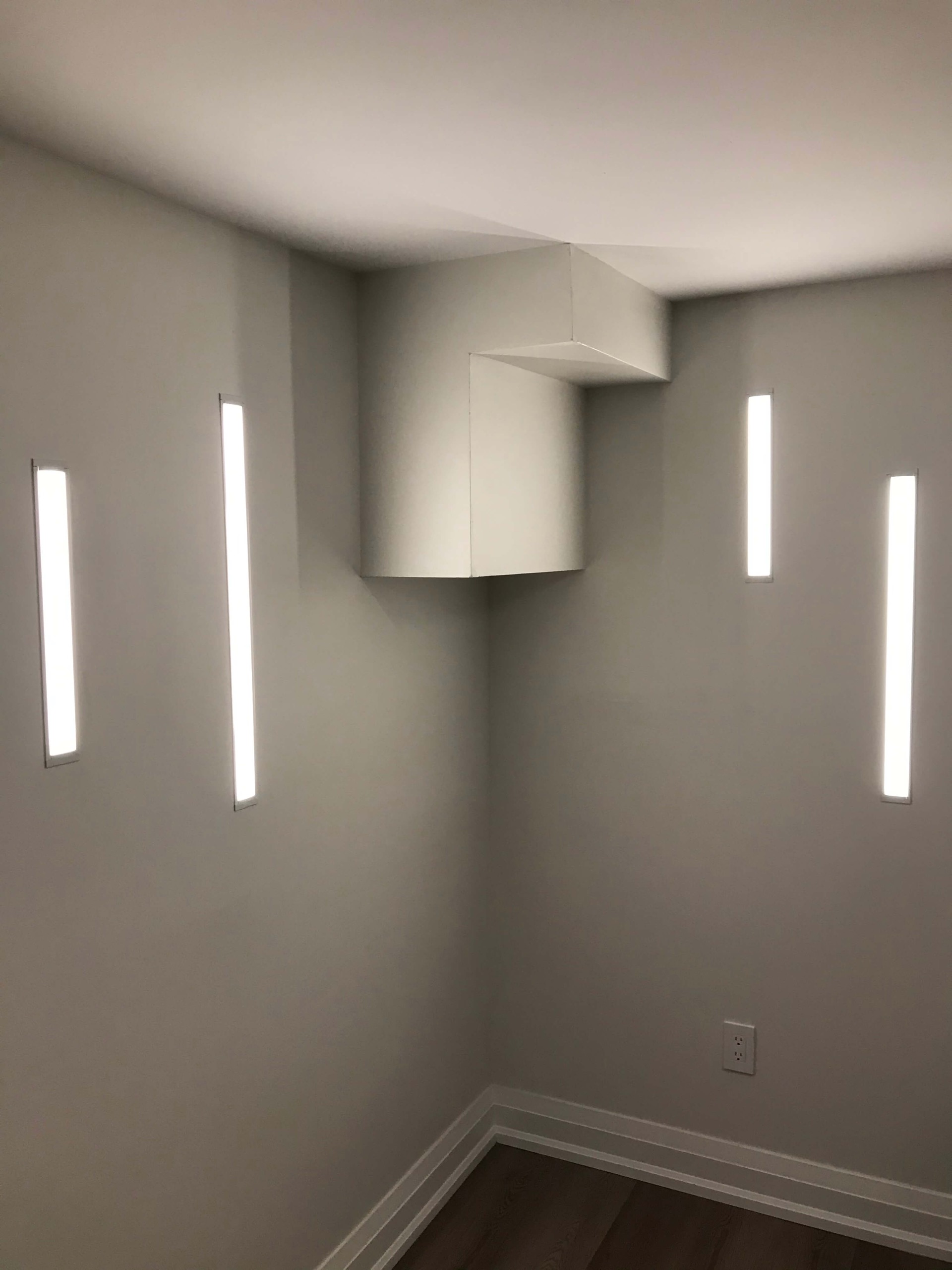
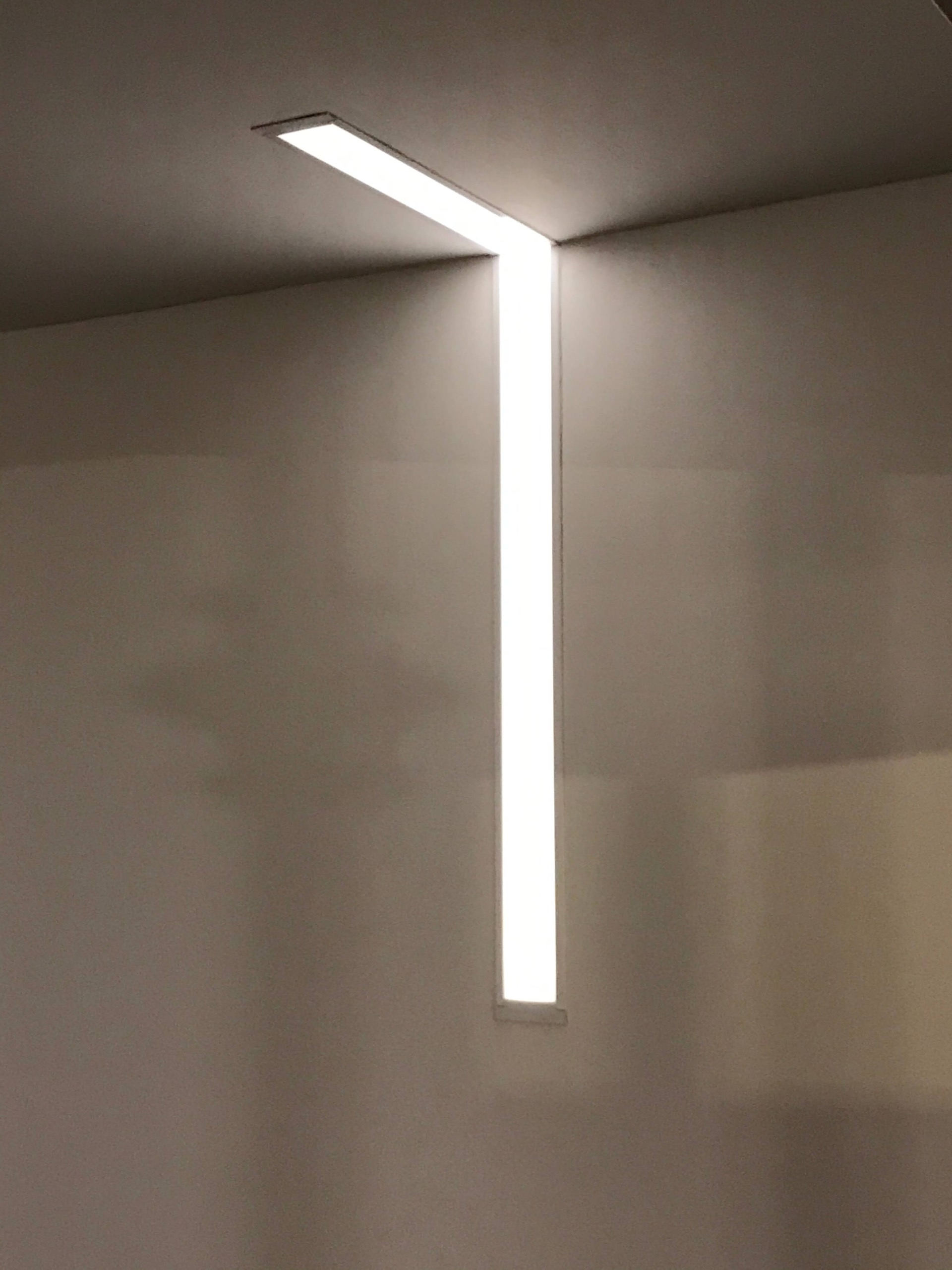
A linear light fixture is a long, narrow luminaire that can be recessed flush into a ceiling or wall, surface-mounted along a ceiling or wall plane, or suspended from a ceiling. In recessed applications, the fixture is virtually invisible, with only the diffuser visible at the surface. In surface-mounted and suspended applications, the aluminium profile is visible and contributes to the architectural character of the space. Diana Lighting manufactures linear fixtures at any length and angle specified. Aluminum profiles come in white, grey, and black as standard, with custom powder coating available in any colour.
What is a linear lighting system?
A linear lighting system consists of an aluminium housing profile, an LED strip light source, a diffuser, an LED driver, and in most cases a dimming or control component. Diana Lighting manufactures every component into a single, pre-wired system that is delivered ready to install. The system is custom manufactured to the exact dimensions and performance specifications of the project.
How does linear light work?
A linear LED lighting fixture uses a high-density LED strip as the light source, housed within an aluminium profile that manages heat and holds the frosted opal diffuser in place. The diffuser spreads the light output evenly across the full length of the fixture, eliminating individual LED dots and producing a continuous, uniform band of illumination. The LED driver converts the power supply to the correct voltage and current for the LED strip, and in dimmable systems manages the dimming signal from the control input.
What are the benefits of linear lighting?
Linear LED lighting delivers uniform illumination across large surfaces with a clean, minimal profile that integrates into the architecture rather than competing with it. Key benefits include a sleek, modern design, consistent light distribution with no hot spots or dark zones, compatibility with dimming and smart controls, a lifespan of approximately 50,000 hours with correct thermal management, and the ability to be customised to any length, angle, or configuration the design requires. Compared to point-source lighting, linear LED systems produce less glare and more comfortable ambient illumination across the spaces they serve.
What are the different styles of linear lighting?
Linear lighting is available in three primary installation configurations. Recessed linear lighting sits flush with the ceiling or wall surface, creating a clean, unobtrusive effect where the light appears to emerge from the architecture itself. Surface-mounted linear lighting is applied directly to a ceiling or wall plane and is visible as a fixture. Suspended linear lighting hangs from the ceiling on cables or rods, making it suitable for dining rooms, kitchen islands, and commercial spaces where the fixture itself contributes to the design of the space.
What is the difference between linear lighting and pendant lighting?
Pendant lighting and linear lighting are different fixture types. A pendant is a vertical fixture that radiates light all around or directs it downward from its tip. A linear fixture emits light from one side along its length, which makes it unsuitable for vertical pendant use, since mounted vertically it would only illuminate one side of the room. Linear lighting is installed horizontally instead, recessed, surface-mounted, or suspended from the ceiling, to distribute even illumination across a surface. Diana Lighting manufactures custom suspended linear lighting fixtures for dining rooms, kitchen islands, and commercial applications.
What is linear suspension lighting?
Linear suspension lighting refers to a linear fixture hung from the ceiling on suspension cables or rods rather than mounted flush to a surface. The fixture is installed parallel to the floor and directs light downward across its length. It is particularly effective in spaces with higher ceilings where the fixture itself becomes a visual element of the interior design.
How do I choose the right linear lighting for my space?
The right linear lighting depends on the function of the space, the ceiling height, the installation method that best suits the architecture, and the desired colour temperature and output level. For dining rooms and kitchen islands, a suspended linear fixture at the correct height and length relative to the surface below is most effective. For commercial interiors and offices, recessed linear systems provide consistent ambient illumination without fixture clutter. Diana Lighting assesses all of these factors during the consultation process and specifies the most appropriate system for each application.
Can linear lighting be dimmed?
Yes. All Diana Lighting linear systems are dimmable using ELV compatible dimming controls. Dimming compatibility is verified during the specification process before manufacturing begins. Every system arrives pre-wired and ready to connect to the specified dimming control.
How high should I hang a linear fixture over a dining table or kitchen island?
As a general guideline, a suspended linear fixture over a dining table or kitchen island should be positioned approximately 70 to 90 centimetres above the surface. Final mounting height is shaped by the ceiling height, how much output the fixture produces, how much natural light the space receives, and how the profile reads visually within the proportions of the room. Diana Lighting provides installation guidance with every system, including recommended mounting heights for each specific application.
What size linear lighting do I need for my space?
A linear fixture over a dining table or kitchen island looks most balanced when it covers roughly two thirds to three quarters of the surface length beneath it. For recessed ceiling applications, linear fixture runs are sized to the exact dimensions of the ceiling recess or the architectural detail they are integrated into. Diana Lighting manufactures every linear system to the exact specifications of the project, so there is no need to adapt a standard size to the space.
What are common problems with linear lights?
The most common issues with linear LED lighting are visible LED dots from inadequate diffusion, uneven colour temperature across a run due to inconsistent manufacturing, dimmer incompatibility causing flickering or buzzing, voltage loss over long runs from inadequate power delivery, and heat management failures that shorten LED lifespan. Diana Lighting addresses all of these at the manufacturing stage. The right diffuser lens is specified to eliminate visible dots. Colour temperature is controlled across the full length of every system from a single Canadian facility. Power delivery is engineered to maintain consistent output across the full run. Dimmer compatibility is verified before manufacturing begins. And aluminium channel construction manages thermal output to support the rated 50,000 hour lifespan.